When it comes to specialized cargo transport, two container types often cause confusion — flat rack and open top containers. Both are designed for oversized or awkwardly shaped cargo, yet each serves a unique purpose. Understanding these differences helps logistics professionals, exporters, and business owners make the right decision for cost efficiency, safety, and ease of loading.
Understanding the Basics
What Is a Flat Rack Container?
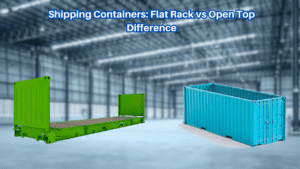
A flat rack container is, quite literally, a flat platform with two end walls but no side walls or roof. It’s widely used for heavy or oversized cargo that doesn’t fit inside traditional containers — think of machinery, boats, or construction equipment.
In practice, the strength of a flat rack lies in its flexible loading options. You can load cargo from the top, sides, or even from the ends using cranes or forklifts. The collapsible ends make storage and repositioning easier, an often-overlooked advantage in global shipping operations.
Typical uses of flat rack containers include:
- Industrial vehicles and heavy equipment
- Steel structures and pipes
- Boats and yachts
What Is an Open Top Container?
An open top container, on the other hand, closely resembles a standard container but lacks a solid roof. Instead, it’s covered with a removable tarpaulin secured by roof bows. This design accommodates tall cargo that wouldn’t fit through the container doors.
For example, if you need to ship large pieces of industrial machinery or tall wooden crates, an open top container allows loading from above using cranes — while still offering side protection.
Common uses of open top containers include:
- Mining equipment
- Crated machines and large engines
- Bulky goods requiring overhead loading
Key Differences Between Flat Rack and Open Top Containers

Flat Rack vs Open Top: Comparison Table
| Feature | Flat Rack Container | Open Top Container |
| Walls & Roof | No side walls or roof | Side walls, no permanent roof |
| Best For | Oversized or extra-wide cargo | Extra-tall cargo |
| Loading Method | Top, sides, or end | Top loading via tarpaulin removal |
| Protection Level | Minimal (open exposure) | Moderate (tarpaulin cover) |
| Special Design | Foldable ends for stacking | Tarpaulin and roof bows |
Imagine you’re shipping a small yacht and a tall industrial boiler.
- The yacht would go on a flat rack, since it’s wide and needs support but not full enclosure.
- The boiler would fit better in an open top, as it can be loaded vertically and protected from rain using the tarpaulin.
A common mistake is selecting a flat rack for tall cargo when side protection is needed — this can result in weather damage or additional securing costs.
Choosing the Right Container for Your Cargo

How to Decide Between Flat Rack and Open Top
When deciding which type suits your shipment, consider three main factors:
- Dimensions of your cargo – Is it wider or taller than standard containers?
- Exposure tolerance – Can it handle weather, or does it require cover?
- Loading logistics – Will you use cranes, forklifts, or manual equipment?
Pro Tip: Plan ahead before getting a container.
Consider the items you want to store and their dimensions so that you don’t have to improvise at the last minute and end up having to buy a different container than the one you already paid for.
In practice, experienced freight forwarders often recommend confirming terminal handling capabilities before loading, as not every port crane can manage an oversized flat rack.
FAQ Section of Shipping Containers: Flat Rack vs Open Top Difference
Can I use a flat rack container for cargo that needs weather protection?
Not ideally. Flat racks offer minimal protection. For weather-sensitive goods, an open top container or additional wrapping is advisable.
Which is more expensive — flat rack or open top?
Generally, flat racks cost more due to their structural design and special handling needs. However, final costs depend on carrier policies and route conditions.