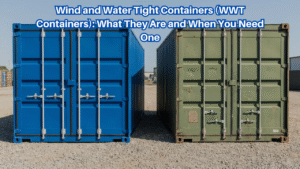
A garage in a shipping container is a modified steel container designed to function as a vehicle workspace. Depending on your needs, the build may include widened or redesigned openings for vehicle access, added ventilation to handle heat and fumes, and electrical or lighting for day-to-day use. People often choose container garages because they can be delivered faster than traditional construction, and they’re easier to scale based on property size, budget, and how many vehicles or tools you want to fit inside.
In this guide, we’ll walk through what to plan before you buy, how the typical modifications work, and what to confirm so your container garage is both safe and practical for real use.
How Container Garages Work (and When They Make Sense)
Shipping containers are naturally strong and weather-resistant, which is exactly why they work well as the “shell” of a garage. The garage functionality comes from upgrades that make the space usable year-round, such as installing a proper roll-up door, adding insulation for temperature control, and designing the internal layout to suit a car, motorcycle, tools, or workshop activities.
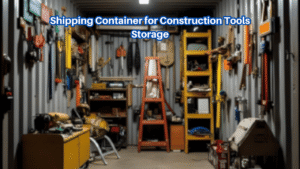
Container garages show up most often as backyard vehicle storage for one vehicle like a compact SUV, small car, or motorcycle. They’re also a popular way to create a dedicated workshop for maintenance, tool storage, and light projects. In some cases, they’re used as accessory structures on farms or remote properties where delivery logistics matter and building timelines need to be kept tight.
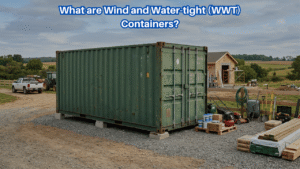
One of the most common mistakes people make is focusing only on container size and overlooking site access. Even if you choose the perfect dimensions for the garage itself, the project can stall if the delivery truck can’t reach the intended placement area. Before you commit, it’s worth measuring pathway width, gate height, and the turning radius needed for the delivery process. Once you have those measurements, confirm the details with the supplier so there are no surprises after everything is scheduled.
Key Planning Basics
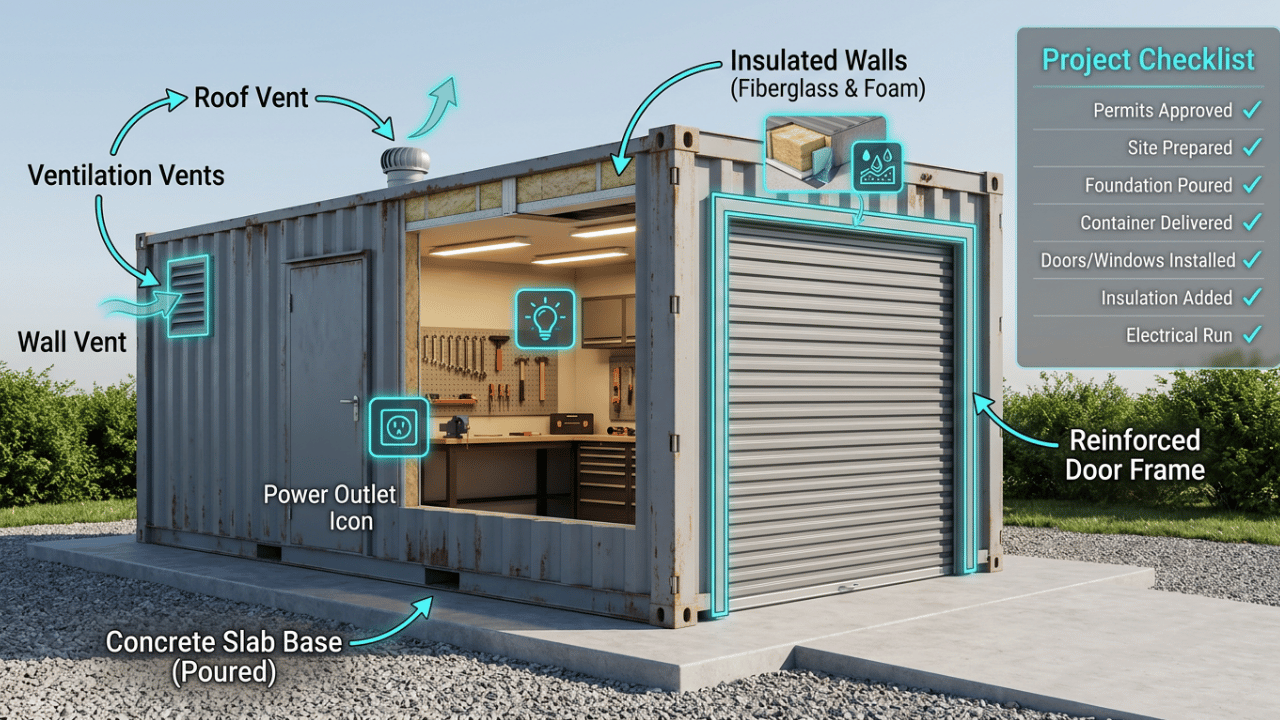
Most successful container garage projects start with a few key decisions. First, think about container size and door placement. If you want easier daily entry, a side door can be more convenient. If you want maximum opening for parking and maneuvering, an end door often provides better access.
Next, plan ventilation early. A garage isn’t only about shelter, it’s also about controlling moisture, heat, and odors. Oil fumes, engine warmth, and humidity need a clear path out of the space, so you’ll usually want airflow that actually works, such as a roof vent paired with wall ventilation options. Planning this upfront helps you avoid cutting into the container later, which can complicate the build.
Finally, consider power and lighting from the beginning. If you plan to charge devices, use work lights, or run basic power tools, you’ll need a practical electrical plan and cable routing that stays safe and doesn’t interfere with insulation, doors, or airflow.
Modifications and Design Tips for a Real Garage
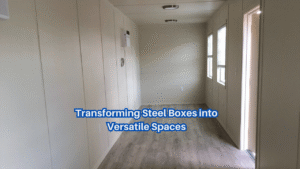
Turning a steel container into a working garage usually requires upgrades that address structure, comfort, and safety. In many ways, it’s similar to converting a storage unit into a space where people will regularly operate, move around, and manage materials. That means you need insulation for temperature control, ventilation for air quality, and moisture control so the interior doesn’t become a rust-promoting environment.
Garage door conversion is one of the most frequent modifications. Many builds include installing a roll-up door or a large swing-style door, but because container openings change how the frame behaves, reinforcements are typically required to keep the structure rigid and the door aligned over time.
Insulation and vapor control are also critical, especially since steel “sweats” when temperatures shift. Condensation can form along seams and door edges if moisture isn’t managed properly, leading to wet conditions that are hard on tools and can accelerate rust. Adding insulation along with a moisture barrier helps keep the interior environment more stable.
Floor preparation is another major factor in whether the garage feels functional. A concrete slab is the most common choice because it provides a durable, level surface for parking and long-term stability. If pouring concrete isn’t an option, you’ll still want a well-planned base with proper drainage so water doesn’t pool or work its way into the structure.
A good way to understand what “real life” changes are needed is to look at how coastal or humid-location projects tend to perform. For example, a homeowner near a coastal area converted a 20-foot container into a garage for a small car and weekend tools. They added cross-ventilation and a dehumidifier to manage humidity. After the build, they noticed less rust on stored tools and no puddling after rain, exactly the type of issue they hadn’t expected until they saw condensation forming at door seams. That kind of outcome is a reminder that moisture control isn’t optional in a garage environment.
Before construction begins, it helps to slow down and confirm the details that prevent headaches later. Start with local permits and check whether the container is treated as an accessory structure in your area. Next, verify electrical requirements even if you think you’ll only need lighting and a single circuit. Planning fire safety also matters, including how you store any flammable materials inside the garage. If you’re working with a contractor, request a written scope of work and ask for photos of prior container builds so you can judge the quality and experience behind the process.
If you’re comparing options, using tools such as an online container calculator for internal clearance planning can make layout decisions easier, especially when space needs to accommodate doors, turning angles, and tool storage. Pairing that with a clear project management checklist can also help you estimate materials, timeline, and sequencing more accurately, particularly when delivery, slab preparation, and electrical installation have to happen in the right order.
FAQ: Garages in Shipping Containers
Are shipping container garages weatherproof enough for year-round use?
Yes, but not automatically. The container shell is weather-resistant, yet condensation and airflow still matter. Insulation with vapor control, proper sealing around doors, and ventilation are key for comfortable, low-maintenance year-round performance.
What’s the biggest factor that affects cost for a container garage?
Site preparation and modifications. Concrete or ground leveling, door cut-outs, insulation, electrical runs, and required permits often drive the budget more than the container purchase itself.
If you want, tell me your location and whether it’s for one car or a workshop setup, I can suggest a practical container size and a basic modification plan.